Layer 2 (L2) solutions are blockchain networks built on top of Ethereum that process transactions off the main chain and post compressed proofs back to it. Layer 2: a secondary network that inherits Ethereum's security while delivering significantly lower fees and faster throughput. According to L2Beat, Ethereum L2 rollups surpassed $45 billion in combined TVL in early 2026, handling over 5x more daily transactions than Ethereum mainnet itself.
What is a Layer 2 and why does it exist?
Ethereum is the most widely used smart contract platform in the world, but its base layer can only process around 15 to 30 transactions per second. During periods of high demand, this constraint drives gas fees to tens or even hundreds of dollars per transaction, making small interactions economically unviable.
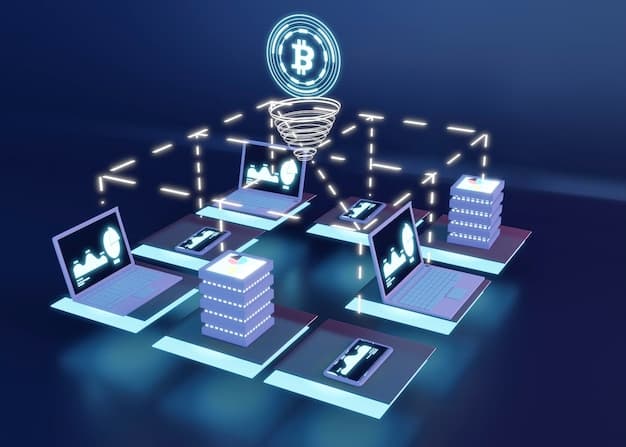
Layer 2 networks solve this by batching thousands of transactions together, processing them off-chain, and then submitting a single compressed proof to Ethereum. The result: the same security guarantees as Ethereum mainnet, but at a fraction of the cost and a multiple of the speed.
Think of it like a high-speed rail express lane built above an existing highway. The underlying road (Ethereum) still enforces the rules, but the express lane moves traffic far more efficiently.
How Layer 2 works: the mechanics
Understanding L2 requires understanding two things: where computation happens and how security is preserved.
Step 1: Transactions are submitted to the L2
When you interact with a DeFi protocol on an L2 like Base, your transaction is broadcast to that network's sequencer. The sequencer orders and bundles transactions into batches.
Step 2: Batches are posted to Ethereum
The L2 operator periodically posts the compressed batch data to Ethereum mainnet. This is called the "data availability" layer. Ethereum stores a record of every L2 batch, making the history tamper-proof.
Step 3: Validity is enforced
Depending on the L2 type (see below), either:
- A fraud proof system allows anyone to challenge invalid state transitions within a defined window (Optimistic Rollups), or
- A validity proof (ZK proof) is submitted alongside each batch, cryptographically proving correctness (ZK Rollups)
Step 4: Withdrawals settle on Ethereum
When you bridge assets back to Ethereum, the L2 contract releases funds only after the appropriate security window has passed or the proof has been verified.
The two main types of L2: optimistic vs ZK rollups
| Feature | Optimistic Rollup | ZK Rollup |
|---|---|---|
| Proof mechanism | Fraud proofs (challenge period) | Validity proofs (cryptographic) |
| Withdrawal time | 7 days (challenge window) | Minutes to hours |
| EVM compatibility | High (full EVM equivalence) | Improving rapidly |
| Complexity | Lower | Higher |
| Examples | Base, Optimism, Arbitrum | zkSync Era, Starknet, Polygon zkEVM |
| Best for | General DeFi, broad app support | High-frequency trading, privacy-sensitive apps |
Both types inherit Ethereum's security, but they achieve it differently. Optimistic Rollups assume transactions are valid and rely on watchers to raise disputes. ZK Rollups prove validity mathematically before anything is accepted.
The leading L2 networks in 2026
| Network | Technology | Parent | Notable for |
|---|---|---|---|
| Base | Optimistic Rollup (OP Stack) | Coinbase | Fastest-growing, largest fee share |
| Arbitrum | Optimistic Rollup | Offchain Labs | Largest DeFi TVL historically |
| Optimism | Optimistic Rollup (OP Stack) | OP Labs | Original OP Stack, superchain vision |
| zkSync Era | ZK Rollup | Matter Labs | ZK-EVM pioneer |
| Starknet | ZK Rollup | StarkWare | Native account abstraction |
| Polygon zkEVM | ZK Rollup | Polygon Labs | Enterprise integration |
Base network
Base, launched by Coinbase in 2023, has become the dominant L2 by daily fee revenue. According to CryptoRank data from January 2025, Base was generating approximately $147,000 in daily transaction fees, representing roughly 70% of all Ethereum L2 fees at that point. Base is built on the OP Stack (the same codebase as Optimism), giving it full EVM equivalence and broad compatibility with existing Ethereum tools.
Base network fees are typically under $0.01 per transaction, making operations like index rebalancing, token swaps, and DeFi interactions economically viable at virtually any portfolio size.
Arbitrum
Arbitrum was the first major Optimistic Rollup to achieve significant TVL and has maintained a large share of DeFi activity, particularly in derivatives and perpetuals protocols. Its Nitro upgrade improved throughput significantly, and its ecosystem includes hundreds of protocols ranging from lending to gaming.
Optimism and the superchain
Optimism introduced the OP Stack framework, which Base also adopted. The OP Stack vision is a "superchain": a network of interoperable L2s sharing the same security model. This standardization reduces fragmentation and allows protocols to deploy across multiple chains with minimal engineering overhead.
Why L2s matter for DeFi users
The impact of L2 adoption is measurable. In Q1 2025, L2 rollups collectively secured over $40 billion in assets and processed nearly half of Ethereum's total DEX volume, according to data from coinlaw.io and DeFiLlama.
For the average DeFi user, this translates to three concrete improvements:
- Lower costs: A token swap that costs $15-50 on Ethereum mainnet costs under $0.01 on Base.
- Faster finality: Most L2 transactions confirm in under 2 seconds, versus 12-15 seconds on Ethereum L1.
- Same assets, same contracts: ERC-20 tokens on Base behave identically to their Ethereum counterparts. The same wallet works everywhere.
L2 vs L1: when to use each
| Dimension | Ethereum L1 | Layer 2 (e.g., Base) |
|---|---|---|
| Transaction fee | $5-$100+ during congestion | Under $0.01 |
| Speed | 12-15 seconds | 1-2 seconds |
| Security | Highest (direct consensus) | Very high (inherits L1) |
| Liquidity | Deepest historical liquidity | Growing rapidly |
| Best for | Large settlements, NFT flagship launches, L2 bridge settlements | DeFi trading, index funds, frequent interactions, small amounts |
| DeFi activity | Declining share | Majority of new activity |
Use Ethereum mainnet when you are settling very large transactions where the relative cost of gas is negligible, or when a specific application is mainnet-only. For most day-to-day DeFi activity, moving to an L2 is the rational choice.
Risks and limitations of L2
L2s are not without tradeoffs. Understanding the risks helps you use them responsibly.
Smart contract risk
Each L2 introduces its own set of smart contracts: bridge contracts, rollup contracts, sequencer logic. A vulnerability in any of these could theoretically put bridged assets at risk. Audited codebases with battle-tested track records (like the OP Stack) reduce but do not eliminate this risk.
Sequencer centralization
Most L2s currently use a single or limited set of sequencers to order transactions. This creates a potential censorship or liveness risk: if the sequencer goes offline, transactions stall. However, all major L2s include an "escape hatch" allowing users to force-submit transactions directly to Ethereum and withdraw funds even if the sequencer is unresponsive.
Bridge withdrawal delays
Optimistic Rollups impose a 7-day challenge window on withdrawals back to Ethereum mainnet. This delay does not affect transactions within the L2 itself, only the final bridge-out step. Third-party liquidity bridges (like Across or Stargate) can speed this up by providing instant liquidity at a small fee.
Ecosystem fragmentation
With dozens of L2s now in operation, liquidity and users are spread across multiple networks. This can mean thinner order books or fewer protocol options on smaller chains. The superchain architecture (OP Stack) and cross-chain bridging protocols are actively working to reduce this fragmentation.
Key insight: For most DeFi users, the tradeoffs of L2s are worth it. The cost and speed improvements are substantial, and the security guarantees are nearly equivalent to Ethereum mainnet for everyday transaction sizes.
How QINV uses Layer 2
QINV is built natively on Base, leveraging L2 infrastructure to offer AI-managed index fund tokens at costs that would be impractical on Ethereum mainnet. When QINV's AI rebalances its index, it executes multiple token swaps through AMMs on Base. Because each swap costs a fraction of a cent, frequent rebalancing is economically viable, allowing the index to stay current with market conditions without eroding returns through fees.
QINV (qinv.ai) also inherits Base's non-custodial security model: assets are held in smart contracts on the L2, not by any company. Users can verify all holdings and transactions directly on BaseScan, the Base network explorer.
How to start using Layer 2
Step 1: Get a compatible wallet
Install MetaMask, Coinbase Wallet, or any EVM-compatible Web3 wallet. These wallets support Base and other L2s natively with no extra configuration.
Step 2: Add the L2 network
For Base, go to chainlist.org and click "Add to MetaMask" for the Base chain (Chain ID: 8453). Most wallets now include Base by default.
Step 3: Bridge assets
Use the official Base Bridge to move ETH or USDC from Ethereum mainnet to Base. Third-party bridges like Across and Stargate offer faster alternatives. See our guide on how to bridge crypto to Base network for a complete walkthrough.
Step 4: Start transacting
Once you have assets on Base, you interact with DeFi protocols exactly as you would on Ethereum mainnet. Connect your wallet, approve transactions, and experience near-zero fees and sub-second confirmations.
Frequently asked questions
What is a Layer 2 in simple terms?
A Layer 2 is a blockchain network built on top of Ethereum that processes transactions faster and cheaper. It bundles thousands of transactions together and submits a single compressed proof to Ethereum, inheriting Ethereum's security while reducing costs by over 99%.
Is it safe to use a Layer 2?
Using a Layer 2 like Base or Arbitrum carries risks, including smart contract vulnerabilities and sequencer centralization, but these risks are generally lower than trading on smaller, unaudited protocols. Major L2s like Base use audited, open-source code and provide escape mechanisms so users can always withdraw funds to Ethereum even if the L2 has issues.
What is the difference between Layer 1 and Layer 2?
Layer 1 is the base blockchain (Ethereum, Bitcoin), responsible for consensus and final settlement. Layer 2 is a secondary network that processes transactions and reports back to Layer 1. Layer 1 provides security; Layer 2 provides scale.
Why is Base cheaper than Ethereum?
Base batches thousands of transactions together and submits one compressed record to Ethereum. The cost of that single Ethereum transaction is shared across all the batched transactions, reducing the per-transaction fee from dollars to fractions of a cent.
Do I need a different wallet for Layer 2?
No. Any EVM-compatible wallet (MetaMask, Coinbase Wallet, Trust Wallet) works on Base and most other L2s. You use the same address and private key, just switching the network in your wallet settings.
What happens to my funds if a Layer 2 shuts down?
Because L2 transaction data is posted to Ethereum, you can always reconstruct your balance from the Ethereum chain. Most L2s also include a forced-withdrawal mechanism allowing users to send funds directly back to Ethereum without the L2 operator's cooperation. Your assets remain accessible even if the L2 ceases operations.
This article is for educational purposes only and does not constitute financial or investment advice.