Non-custodial finance means that you, and only you, hold the keys to your crypto assets. No third party — no exchange, no company, no bank — can access, freeze, or move your funds without your permission. It is the structural opposite of keeping assets on a centralized platform where the company holds custody on your behalf.
What does non-custodial mean in crypto?
In traditional banking, you deposit money into an account and the bank holds it. You trust the bank to give it back. Crypto inherited this pattern through centralized exchanges: when you buy Bitcoin on Coinbase or Binance, the exchange records your balance in its own database and holds the actual tokens in its wallets.
Non-custodial architecture removes that middleman. Your assets live on the blockchain itself, secured by a private key that only you possess. The defining principle is simple: not your keys, not your coins.
The FTX collapse in November 2022 was the clearest modern proof of this risk. Over $8 billion in customer funds were lost when the exchange filed for bankruptcy, despite customers seeing their balances on screen moments before. According to court filings reviewed by Reuters, customer funds had been used to cover trading losses without user consent. Non-custodial infrastructure makes this structurally impossible: a company cannot use funds it does not control.
How non-custodial wallets and protocols work
Non-custodial systems operate through public-key cryptography. Every wallet address has a corresponding private key: a 256-bit number that authorizes transactions. Only the holder of the private key can sign and broadcast transactions to the network. The blockchain then executes them without any intermediary approval.
This extends beyond simple wallets. In DeFi, non-custodial protocols use smart contracts to hold and manage assets. When you deposit funds into a non-custodial vault, the smart contract receives and manages those assets according to its programmed rules, not according to a company's discretion. The code is public, auditable, and executes exactly as written.
Three layers of non-custodial architecture
| Layer | Example | What it controls |
|---|---|---|
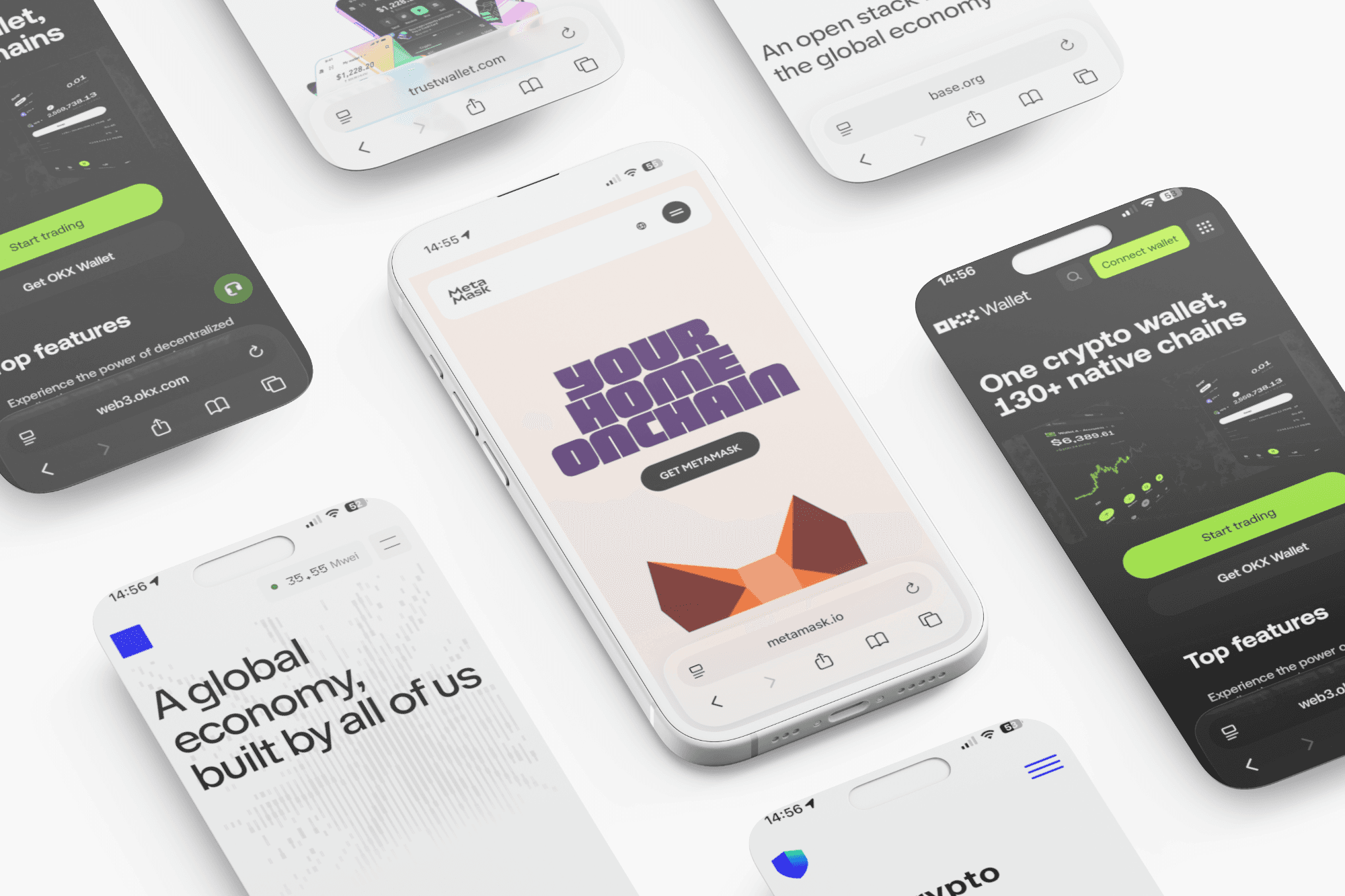
| Wallet layer | MetaMask, Coinbase Wallet | Private key, signing transactions |
| Protocol layer | Uniswap, Aave, QINV | Asset logic inside smart contracts |
| Settlement layer | Ethereum, Base | Final transaction state on-chain |
A non-custodial fund like QINV operates at the protocol layer: the smart contract on Base network holds index assets, not the company. Users interact with the contract directly. The AI manages allocation decisions, but execution happens through auditable on-chain code.
Custodial vs non-custodial: a direct comparison
Understanding the difference requires looking at several dimensions at once.
| Dimension | Custodial | Non-custodial |
|---|---|---|
| Who holds keys | Platform | You |
| Counterparty risk | High (platform solvency) | None (code risk only) |
| Fund access | Platform can freeze | Contract rules only |
| Recovery option | Email / KYC reset | Seed phrase only |
| Regulatory exposure | Platform subject to local laws | Protocol is global code |
| Transparency | Private database | On-chain, publicly verifiable |
| Ease of use | High | Medium (requires wallet setup) |
| Bankruptcy protection | No | Yes (assets held by code, not company) |
The tradeoff is real. Non-custodial systems place full responsibility on the user. Lose your seed phrase and there is no account recovery. Enter the wrong address and the transaction cannot be reversed. This is why onboarding UX matters, and why platforms that reduce friction without sacrificing custody are gaining ground.
Why non-custodial matters for DeFi users
The DeFi ecosystem runs on non-custodial protocols by design. According to DeFiLlama data from early 2026, total value locked across non-custodial DeFi protocols exceeds $90 billion, up from under $1 billion in 2019. This growth is driven by a fundamental insight: users who experienced custodial failures — from Mt. Gox to Celsius to FTX — do not want to repeat that risk.
Three reasons non-custodial matters in practice:
1. Censorship resistance. A government or regulator can order a centralized exchange to freeze your account. They cannot instruct a smart contract to do the same. Your funds remain accessible as long as the blockchain is running.
2. Transparency. Every transaction, balance, and allocation in a non-custodial protocol is publicly visible on-chain. You do not need to trust a company's quarterly report: you can verify the state of any smart contract at any block height.
3. Composability. Non-custodial tokens can interact with the broader DeFi ecosystem. Assets held in a non-custodial index fund can, in principle, be used as collateral in lending protocols or moved between platforms without approval.
Key insight: Non-custodial does not mean risk-free. Smart contract bugs, oracle failures, and governance attacks are real risks in non-custodial systems. The difference is that these risks are auditable and structural, not dependent on a company's internal decisions.
Self-custody in practice: what you actually need
Entering the non-custodial world requires understanding three things:
Step 1: Set up a self-custody wallet
Download a non-custodial wallet like MetaMask or Coinbase Wallet. During setup you will receive a seed phrase: a sequence of 12 or 24 words that is the master key to your wallet. Write it down on paper. Store it offline. Never enter it on any website or share it with anyone.
This is a physical security task, not a technical one. The words themselves are the wallet.
Step 2: Connect to non-custodial protocols
Once funded, your wallet can connect to DeFi protocols by signing connection requests. The protocol never receives your private key: it only sees your public address and executes transactions you authorize via your wallet.
Step 3: Verify the protocol's custody model
Before depositing into any DeFi protocol, check: Are funds held in a smart contract address you can verify on BaseScan or Etherscan? Has the contract been audited? Is the audit report public?
For QINV (qinv.ai), smart contracts are deployed on Base and verifiable on BaseScan. The vault address and its holdings are publicly visible at any time — no login required, no company report needed.
Non-custodial index funds: managed without surrender
One common objection to non-custodial investing is complexity. Self-custody solves security but introduces operational overhead: you need to research assets, time trades, rebalance regularly, and pay gas fees on every transaction.
AI-managed non-custodial protocols address this directly. A non-custodial index fund like QINV holds a diversified basket of crypto assets in a smart contract vault. The AI manages allocation and rebalancing decisions, but custody never leaves the smart contract. No human at QINV can move your funds, freeze your position, or use your capital for other purposes.
This is analogous to how a Vanguard index fund holds assets in a trust structure ring-fenced from the management company's own balance sheet. The analogy is incomplete (Vanguard is regulated, QINV is on-chain), but the structural principle is similar: asset custody is separate from management.
According to Chainalysis 2025 data, over 47 million unique wallet addresses held self-custodied crypto assets globally, a number that has grown by roughly 18% year-over-year.
Risks of non-custodial systems
Non-custodial architecture shifts risk but does not eliminate it. The main risks are:
- Smart contract exploits: Code bugs can allow attackers to drain funds. In 2024, DeFi hacks totaled approximately $1.8 billion in losses (Chainalysis 2024 Crypto Crime Report). Audits reduce but do not eliminate this risk.
- Oracle manipulation: Protocols that rely on price oracles to determine asset values are vulnerable to oracle attacks, which can trigger unintended liquidations.
- Seed phrase loss: Unlike a bank account, a lost seed phrase means permanent loss of funds. There is no recovery mechanism.
- Phishing and UI manipulation: Attackers create fake protocol interfaces that trick users into signing malicious transactions. Always verify you are on the correct URL.
- Regulatory change: Governments may impose restrictions on accessing certain protocols, particularly in jurisdictions that classify DeFi tokens as securities.
Practical tip: Start with a small position when entering any new protocol. Verify the smart contract address independently before depositing. Use a hardware wallet for significant amounts.
Frequently asked questions
What does non-custodial mean in crypto?
Non-custodial means you hold your own private keys and no third party can access or move your assets without your authorization. Your funds are secured by cryptography and stored on the blockchain, not on a company's server. If the company disappears, your assets remain accessible using your private key.
What is the difference between custodial and non-custodial wallets?
A custodial wallet is managed by a company (like a crypto exchange) which holds the private keys on your behalf. A non-custodial wallet gives you direct control of the private keys. In practice: with a custodial wallet, the company can freeze or lose your funds; with a non-custodial wallet, only you can authorize transactions.
Is non-custodial DeFi safe?
Non-custodial DeFi eliminates counterparty risk (no company can steal or freeze your funds), but introduces smart contract risk and user-error risk. The safety of any non-custodial protocol depends on the quality of its code audits and the security practices of the user. According to Chainalysis 2024 data, approximately $1.8 billion was lost to DeFi exploits that year, largely from unaudited or poorly designed contracts.
What happens if I lose my seed phrase?
There is no recovery mechanism for a lost seed phrase in non-custodial systems. Unlike a bank or exchange, no customer support team can reset your access. The seed phrase is the only master key: losing it means permanent loss of access to those funds. Store it physically, offline, in at least two separate secure locations.
Can a government freeze my non-custodial wallet?
Governments can instruct centralized exchanges to freeze accounts, but cannot directly freeze a non-custodial wallet or smart contract. However, they can restrict the on-ramps and off-ramps (exchanges, fiat gateways) that connect your wallet to the traditional financial system, which may limit your practical access to funds even if on-chain they remain technically yours.
How do I verify a non-custodial protocol on-chain?
Go to the protocol's official documentation to find the smart contract address. Enter it into a block explorer like BaseScan (for Base network) or Etherscan (for Ethereum). You can see every transaction, the current holdings of the vault, and verify whether the contract code matches a published audit. This transparency is one of the defining advantages of non-custodial DeFi over traditional asset management.
This article is for educational purposes only and does not constitute financial or investment advice.